
Scrap tire pyrolysis oil is mainly derived from tire/rubber pyrolysis, with its primary components being hydrocarbons. Its core value lies in its dual attributes as an important secondary resource, serving both as an energy substitute and a chemical feedstock. Tire pyrolysis oil is not only key to solving “black pollution” but also represents “waste-to-oil” and an important pathway for achieving the circular economy and carbon emission reduction.
Scrap tire pyrolysis oil is mainly composed of a complex hydrocarbon mixture containing gasoline, diesel, and heavy oil fractions. It is rich in aromatics and also contains small amounts of sulfur compounds and nitrogen oxides. Its value lies in its considerable economic benefits, its ability to completely resolve environmental problems, and its strategic significance in promoting resource circularity and energy security.
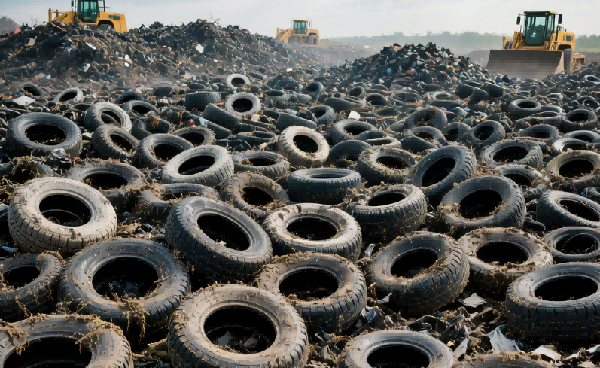
From “Black Pollution” to “Urban Mines”
The value of scrap tire pyrolysis oil is reflected not only in its direct economic viability as a fuel but also in its profound implications for resource circulation, environmental protection, and national strategy.
– Resource Utilization: Pyrolysis technology can recover oil from a single tire, and together with by-products such as carbon black and steel wire, achieves nearly 100% resource utilization. Taking Niutech, a world-renowned pyrolysis equipment manufacturer, as an example, its continuous tire pyrolysis system perfectly realizes the transformation of scrap tires into pyrolysis oil.
– Energy Substitution and Economy: Scrap tire pyrolysis oil has a high calorific value and can serve as a clean alternative fuel for industrial boilers, power plants, and cement kilns, reducing the consumption of virgin petroleum resources.
– High-Value Refining: Through deep processing, pyrolysis oil can be converted into higher-value products, such as marine fuel, aviation kerosene, and recycled diesel for vehicles.
– High-Value Chemicals: Examples include limonene, used as an environmentally friendly solvent and chemical intermediate, as well as benzene, toluene, and xylene (BTX aromatics)—basic chemical feedstocks.
– Environmental Benefits—Complete Resolution of “Black Pollution”: Scrap tires are extremely difficult to degrade naturally, and traditional landfilling or incineration causes severe pollution. Pyrolysis technology operates in a fully enclosed, oxygen-free environment, achieving the environmental goals of “zero pollution, zero residue, zero emissions, and full utilization,” making it an effective way to eradicate “black pollution.” Compared to stockpiling or combustion, the pyrolysis process can significantly reduce emissions of CO₂, SO₂, NOx, and other gaseous pollutants, serving as a key link in achieving “dual-carbon” goals.
– Driving the Circular Economy Industry: The production of pyrolysis oil drives a complete industrial chain—from scrap tire recycling equipment and tire pyrolysis systems to the eventual transportation of chemical feedstocks to chemical plants—fostering coordinated development across the entire chain.
The pyrolysis oil industry is also highly integrated with sectors such as petrochemicals and rubber manufacturing, truly realizing the closed-loop economy of “from tires, back to tires” and accomplishing the green transformation that turns “black pollution” into “black gold.”