
Against the backdrop of continuously growing global plastic production and the inadequacy of traditional treatment methods, waste plastic recycling technology is rapidly advancing toward industrialization, emerging as a critical pathway to address both plastic pollution and resource scarcity. Compared to well-established mechanical recycling, chemical recycling demonstrates revolutionary advantages in handling low-value mixed plastic waste and achieving “upcycling” or even “closed-loop recycling” due to its unique technical principles.
I. Environmental Advantages: A Paradigm Shift from “End-of-Pipe Treatment” to “Source-Level Circularity”
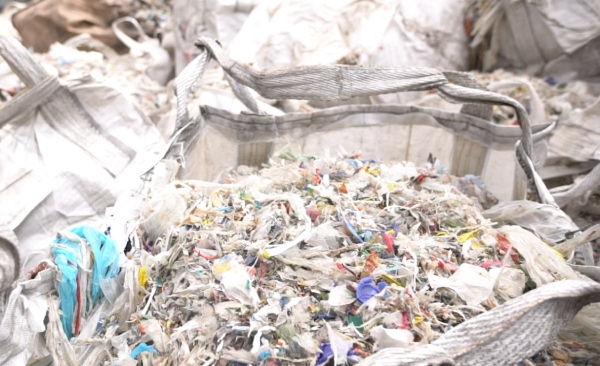
The fundamental environmental advantage of chemical recycling lies in its broad applicability to diverse waste streams and the thoroughness of its resource conversion. Mechanical recycling is primarily suitable for high-value, single-category, and clean plastic waste, such as PET beverage bottles and HDPE containers. However, low-value plastics like flexible packaging and film bags—constituting approximately 46% of plastic production—are often contaminated and compositionally complex, rendering mechanical recycling economically unviable and leading to landfilling or incineration. Chemical recycling, in contrast, can process these “blind spots” of mechanical recycling—even treating historical waste from landfills—transforming environmental burdens into resource reservoirs.
In terms of carbon emissions, chemical recycling offers even more significant benefits. Research indicates that chemical recycling of waste plastics via pyrolysis technology can reduce carbon dioxide emissions by 2.3 tons per ton (equivalent) compared to producing virgin plastics.
More importantly, chemical recycling represents a qualitative leap from “downcycling” to “upcycling” and ultimately to “closed-loop recycling.” Recycled plastics produced through mechanical recycling experience progressive performance degradation and eventually end up landfilled or incinerated. In contrast, chemical recycling can convert waste plastics into plastic feedstocks or monomers with quality equivalent to those derived from crude oil. For example, Niutech’s pyrolysis production lines transform waste plastics into high-quality pyrolysis oil—essentially “plastic-to-oil“—which clients’ own chemical plants can process into new plastics with performance identical to virgin materials, truly achieving a complete “waste plastic to new plastic” closed loop.
II. Economic Value and Technological Breakthroughs
The economic value of chemical recycling stems from the high added value of its products and resilience to oil price fluctuations. The mechanical recycling industry operates on thin profit margins, heavily reliant on government subsidies and a stable supply of low-quality feedstock. Chemical recycling, however, directly converts waste plastics into bulk chemical products like fuel oil and monomers, whose value is linked to crude oil prices, offering vast market potential.
Although chemical recycling has long been conceptually proposed, its large-scale industrialization was historically limited by technical bottlenecks such as reactor coking, unstable continuous operation, and low product purity. In recent years, Chinese enterprises represented by Niutech have overcome these global challenges through continuous technological innovation, advancing chemical recycling from “feasible” to “reliable” and enabling the production of high-quality pyrolysis outputs.
Niutech’s core breakthrough lies in achieving large-scale, continuous, and intelligent operation of waste plastic pyrolysis equipment. Its independently developed “Industrial Continuous Waste Plastic Pyrolysis Production Line” addresses industry challenges like system coking and dynamic sealing during feeding/discharge, enabling stable continuous operation from a single startup. This reliability is key to securing international high-end market contracts. For instance, its equipment installed in a high-end chemical recycling plant for waste plastics in Vietnam has been commissioned and has operated efficiently and continuously for several months, with all indicators meeting expectations.
In terms of technical pathways, chemical recycling is mainly categorized into cracking methods (for addition polymers like PE and PP) and depolymerization methods (for condensation polymers like PET).
III. Niutech: Chinese Technology Leading Global Circular Economy Practices
Niutech is not only a technological pioneer but also a leader in the global expansion of China’s high-end environmental equipment and the establishment of industry standards. Through decades of R&D, Niutech has mastered multiple core technologies, including “thermal dispersion, gas-tight sealing, and anti-polymerization,” ensuring safe, environmentally compliant, large-scale, and continuous production—clearing the path for commercial operations and establishing the company as a globally renowned manufacturer of waste plastic pyrolysis systems. Its technology and equipment have been exported to dozens of countries and regions worldwide. Notably, its projects have received endorsement from international chemical giants like BASF. For example, the equipment supplied for the Denmark project of Norway’s Quantafuel serves as a benchmark for chemical recycling of waste plastics in Europe. The RMB 198 million order secured with a UK client in 2025 further signifies rigorous recognition of Chinese technology in high-end markets.
Beyond equipment supply, Niutech provides integrated closed-loop solutions encompassing “plastic waste collection—pyrolysis—refining—plastic production.” In its Vietnam project, the pyrolysis oil produced is directly used in the client’s own chemical plant for further processing, achieving cross-border industrial chain integration and demonstrating the true commercial closed-loop value of chemical recycling.