
Against the stark backdrop of global plastic production exceeding 10 billion tons and a recycling rate below 10%, transforming massive volumes of plastic waste into valuable resources has become a critical issue concerning environmental security and energy strategy. Plastic waste-to-energy solutions centered on chemical recycling—particularly continuous pyrolysis technology—are turning the once-troubling “white pollution” into renewable “urban oil fields,” offering a viable pathway for the global circular economy and “dual-carbon” goals.
I. Plastic Waste-to-Energy: The Essential Path to Addressing Pollution and Resource Challenges
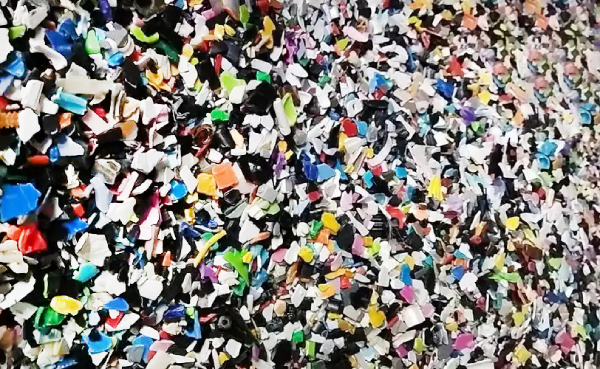
Traditional methods of treating plastic waste, such as landfilling and incineration, increasingly reveal unsustainable drawbacks. Landfilling not only occupies vast land areas but also poses long-term risks of soil and groundwater contamination. Incineration, while recovering some energy, may generate toxic substances like dioxins and emit significant amounts of carbon dioxide. In contrast, converting waste plastics into energy products—such as oil and combustible gas through thermochemical processes—represents a fundamental approach that simultaneously achieves pollution control and resource regeneration.
The significance of this solution is profound. On one hand, it effectively tackles “white pollution,” achieving waste reduction and harmless treatment. On the other hand, converting waste plastics into oil helps alleviate national energy supply-demand tensions. Utilizing low-quality plastic waste for energy recovery yields high-quality oil products, offering strategic value in reducing dependence on imported crude oil. Globally, chemical recycling of plastics is recognized as the sole low-carbon, clean method capable of achieving sustainable plastic circularity.
II. The Technical Core: Continuous Pyrolysis—The Key to Transitioning from Laboratory to Industrialization
Among various chemical recycling pathways, pyrolysis stands out for its broad applicability and high-value outputs. Its fundamental principle involves heating waste plastics under oxygen-deficient or oxygen-free conditions to break down polymer chains, ultimately converting them into pyrolysis oil, combustible gas, and solid residues. However, translating laboratory technology into stable, efficient industrial capacity remains a global challenge.
Chinese enterprises represented by Niutech have achieved breakthroughs in this area. Through decades of scientific research, the company has independently developed eight core technologies, including “thermal dispersion, gas-tight sealing, and anti-polymerization.” Its pyrolysis equipment, honored with the National Science and Technology Progress Award, enables deep resource recovery from low-value feedstocks such as municipal and mixed waste plastics while ensuring safe, environmentally compliant, large-scale, continuous operation. This technological breakthrough makes it possible to convert plastics into high-quality pyrolysis oil on a large scale and with high efficiency, truly turning pollutants into resources.
III. Leadership in Practice: Niutech’s Technical Contributions and Global Deployment
Niutech is not only a technological pioneer but also a model for the global expansion of China’s high-end environmental equipment. The company provides end-to-end solutions, with its technology and equipment exported to dozens of countries worldwide, cumulatively processing tens of millions of tons of organic waste—demonstrating the robustness of Chinese technology.
– Vietnam High-End Chemical Recycling Plant Project
Utilizing Niutech’s “New Generation • Large-Scale Industrial Continuous Intelligent Waste Plastic Pyrolysis Technology and Integrated Equipment,” this project involves constructing a high-end chemical recycling plant for waste plastics in Vietnam. Using industrial plastic waste as feedstock, it converts plastics into high-quality pyrolysis oil, which is directly supplied to the client’s own chemical plant for further processing. This successfully achieves a complete “plastic-to-plastic” chemical recycling closed loop. The project has been commissioned and has operated efficiently and continuously for several months, with all indicators meeting expectations.
– Denmark Project
Niutech’s technology and equipment were earlier applied in a Danish waste plastic pyrolysis project, which received investment and recognition from the international chemical giant BASF. This project stands as an early highlight of Niutech’s deep engagement in international high-end markets, laying a solid foundation for subsequent collaborations.
– UK Large-Scale Project
A major UK project employing Niutech’s advanced technology is progressing smoothly, further validating the adaptability and reliability of its solutions across diverse markets and regulatory environments.
The success of these international projects collectively verifies the safety, reliability, and outstanding environmental performance of Niutech’s pyrolysis solutions. Its innovative model of “integrating technological equipment with synergistic industrial development” has created multiple international precedents, providing verifiable, replicable, and scalable demonstration cases for global plastic pollution governance. These achievements not only prove the technical and economic feasibility of “plastic-to-oil” conversion but also underscore Niutech’s growing role in the global circular economy, contributing Chinese wisdom and solutions to the worldwide battle against plastic pollution.