
In recent years, as “white pollution” has intensified, the recycling of waste plastics has garnered increasing attention. Building upon traditional waste plastics recycling industries, the “N+1” industrial model has emerged.
What is the “N+1” Industrial Model for Plastics Recycling?
“N” Distributed Pretreatment Factories: These factories are strategically located in major cities or raw material concentration areas, close to the source of waste plastic generation. Their primary task is to perform preliminary processing on collected low-value, mixed waste plastics, converting them into standardized semi-finished pyrolysis oil using technologies such as pyrolysis.
“1” Centralized Core Factory: This factory is typically sited at transportation hubs or within industrial parks and is responsible for receiving and centrally processing the pyrolysis oil from all “N” factories. Employing more advanced deep conversion technologies—such as catalytic cracking and olefin recombination—it directly transforms the pyrolysis oil into plastic monomers like ethylene and propylene, which are then polymerized to produce recycled plastic resins of virgin quality.
This model aims to achieve a full physical cycle from waste plastics to new plastics, constructing a shorter, more autonomous industrial chain. This revolutionary “N+1” industrial model has been proposed and is regarded as a significant future direction. The entire process is completed within an independent closed-loop system, allowing products to be 100% traceable back to waste plastic sources.
On the feedstock side, the distributed factories efficiently process dispersed, highly contaminated waste plastics close to the source, improving collection efficiency and economics. On the technology side, the plastic pyrolysis units at the core factory achieve higher hydrocarbon conversion efficiency and yields of target products (such as propylene), simplifying the process flow. On the value side, it establishes a completely independent circular industrial chain with clear product traceability.
The successful operation of the “N+1” model invariably depends on the efficient, stable, and large-scale conversion of waste plastics into high-quality intermediate or final products. In this critical area, Niutech, a globally renowned pyrolysis equipment manufacturer with nearly four decades of dedicated expertise, provides a solid technological foundation. Through its internationally successful projects, it has also established a benchmark for the commercial validation of the entire industry.
The greatest technical obstacle in transitioning waste plastic pyrolysis from the laboratory to industrialization lies in achieving large-scale, industrial continuous, and long-term stable operation of the equipment. Many pyrolysis projects globally operate below their designed capacity, fundamentally due to unresolved, widely acknowledged challenges such as reactor coking, difficulties in dynamic sealing during feeding/discharge, and product polymerization.
Through decades of scientific research and development, Niutech has independently developed eight core technologies, including “thermal dispersion, gas-tight sealing, and anti-polymerization,” completely overcoming these industrialization bottlenecks. Its “Industrial Continuous Intelligent Pyrolysis Process,” which has been awarded the National Science and Technology Progress Award, enables precise temperature-controlled heating and rapid conversion of waste plastics within fully enclosed production lines, yielding high-quality pyrolysis products suitable for deep processing and realizing the “plastic-to-oil” process.
Niutech’s technological strength has been rigorously validated not only in the laboratory or domestic market but also in international high-end projects, achieving chemical recycling of plastics and creating numerous successful case studies.
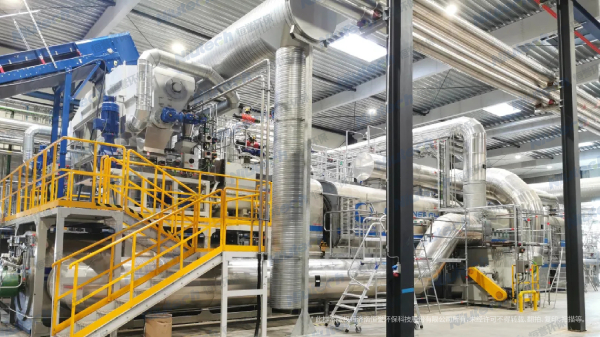
A landmark example is an internationally renowned group that, after a rigorous global selection and comparison process, ultimately chose Niutech’s “New Generation • Large-Scale Industrial Continuous Intelligent Waste Plastic Pyrolysis Technology and Integrated Equipment” to build a high-end chemical recycling plant for waste plastics in Vietnam. This project converts industrial plastic waste into high-quality pyrolysis oil, which is directly supplied to the client’s own chemical plant for subsequent processing, successfully achieving a complete closed loop of chemical recycling from “waste plastics to new plastics.” The project has been successfully commissioned and has operated efficiently and continuously for several months, receiving high praise from the client, with expansion and replication plans currently underway. This project vividly demonstrates a closed-loop model approaching the “N+1” concept, showcasing upstream-downstream synergy.
Furthermore, Niutech’s technology has long been recognized by international chemical giants. Its equipment was deployed in a waste plastic chemical recycling project in Denmark, which received investment from BASF. Currently, a large-scale UK waste plastic pyrolysis resource recovery project utilizing Niutech’s technology is also progressing smoothly. Niutech’s technology and integrated equipment have obtained seven authoritative international certifications, including EU CE, German TÜV, ATEX explosion-proof, and ISCC International Sustainability and Carbon Certification, and have been exported to dozens of countries and regions worldwide. These achievements fully demonstrate that China’s high-end environmental protection equipment possesses the advanced technology, reliability, and environmental standards to compete on equal footing with international giants, providing core equipment support for various chemical recycling project models globally.
As chemical recycling capacity continues to expand and legal, regulatory, and certification systems improve, the industrial model will inevitably evolve towards more advanced forms. Chinese enterprises possessing core technologies and international experience are poised to play a crucial role in this global green industrial revolution.