
Traditional plastic treatment methods—landfilling and incineration—are facing mounting environmental and policy pressures. Against this backdrop, chemical recycling technology has emerged as a new direction and new hope for plastic pollution control, both domestically and internationally. It is capable of converting low-value waste plastics—which cannot be effectively and economically recycled through mechanical methods—into plastic feedstocks of quality equivalent to those produced from crude oil, thereby achieving closed-loop development for the plastics industry.
I. Chemical Recycling – Bottlenecks of Traditional Mechanical Recycling and Breakthroughs of Chemical Recycling
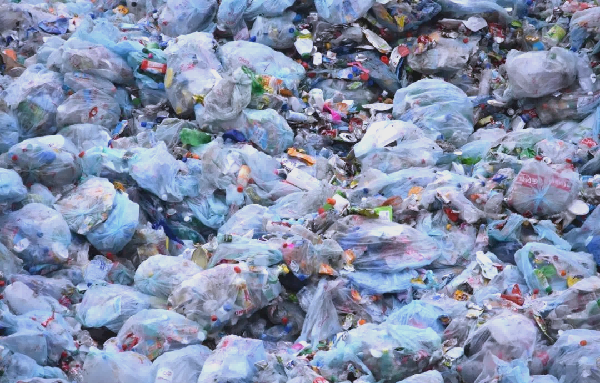
Mechanical recycling is currently the primary method for waste plastic recovery, but it has clear technical and economic boundaries. Drawing from the practices of advanced countries and regions in material recycling of waste plastics, engineering plastics, and rigid packaging plastics, such as hollow bottles—which have good resource value—can generally be effectively recycled through mechanical means. However, low-value waste plastics such as flexible packaging and film bags, which account for approximately 46% of plastic production, are constrained by product characteristics and are generally not technically or economically viable for mechanical recycling; they are typically incinerated or landfilled.
Compared with mechanical recycling, chemical recycling offers broad feedstock adaptability. It can recover and utilize low-value waste plastics, composite packaging, and even historically stockpiled waste plastics from landfills or natural environments that cannot be effectively and economically processed by mechanical recycling. Chemical recycling converts plastics into energy or further transforms them into plastic feedstocks of quality equivalent to those produced from crude oil, enabling closed-loop development for the plastics industry.
II. The Main Technological Pathway in Chemical Recycling – Pyrolysis Technology
Pyrolysis is currently the most mature and widely applied chemical recycling technology, with Niutech serving as the industry leader in this field.
This technology operates under oxygen-free conditions at specific temperatures, converting plastics into small molecules and monomers that can then be further synthesized into various useful chemical products. The core advantage of pyrolysis lies in its strong feedstock adaptability—it can process various types of waste plastics, including single or mixed plastics such as PP, PE, and PS, without requiring sorting, washing, or dewatering pre-treatment.
The most direct and significant effect of chemical recycling is the conversion of low-value waste plastics into valuable energy and chemical resources.
Chemical recycling of waste plastics can effectively replace traditional petroleum resources, reducing dependence on fossil fuels. It effectively addresses the blind spots of current mechanical recycling and the bottlenecks in plastic material utilization. Under safe and environmentally compliant conditions, it enables large-scale, continuous processing of various low-value, mixed, and contaminated waste plastics, converting them into chemical feedstocks of quality equivalent to those from crude oil, thereby achieving the same-grade, high-value applications from waste plastics to new plastics. This is not merely a supplement to traditional recycling methods but a fundamental restructuring of the plastic circular economy system.
III. Niutech: Practices and Contributions of a Leader in Chemical Recycling Technology
As a technology-driven enterprise, Niutech has specialized in pyrolysis technology for over 30 years and stands as a leader in the field with core technological expertise. Its self-developed “Industrial Continuous Waste Plastic Pyrolysis Production Line” has been honored with the National Science and Technology Progress Award—the highest national scientific honor in China.
Niutech’s core equipment, the “Industrial Continuous Waste Plastic Pyrolysis Production Line,” is applicable to various types of waste plastics without requiring sorting, washing, or dewatering pre-treatment. By thoroughly decomposing the high-molecular polymers in waste plastics and returning them to a small-molecule or monomer state, it produces plastic pyrolysis oil, solid fuel, and combustible gas, achieving resource recovery of waste plastics under safe, environmentally compliant, and continuously stable operating conditions.
Niutech’s technology has been successfully deployed across multiple provinces in China and exported to dozens of countries and regions, including Germany, the United Kingdom, South Korea, Denmark, Brazil, Hungary, Turkey, Estonia, Iraq, India, and Thailand.
Against the backdrop of global plastic pollution control, chemical recycling is no longer merely a supplement to mechanical recycling but a core pathway for achieving full lifecycle management of plastics and the circular economy. Chemical recycling is transforming what was once considered an “environmental burden”—waste plastics—into valuable energy and chemical resources.