
In 2026, new policies have emerged in tire recycling worldwide. Taking the EU as an example, it has advanced circular-economy regulations covering the full vehicle lifecycle alongside new tire eco-design rules, strengthening producer responsibility, setting higher requirements for recycled materials, and incorporating chemical recycling into the technical pathways for achieving circular targets. As policy drives change, market demand is also growing steadily. The global tire recovered carbon black market maintains a high annual growth rate, and the market for advanced waste tire pyrolysis equipment is gradually expanding. These shifts show that comprehensive waste tire utilization is gaining market attention, and the concept of moving from waste to resource is being accepted by more people.
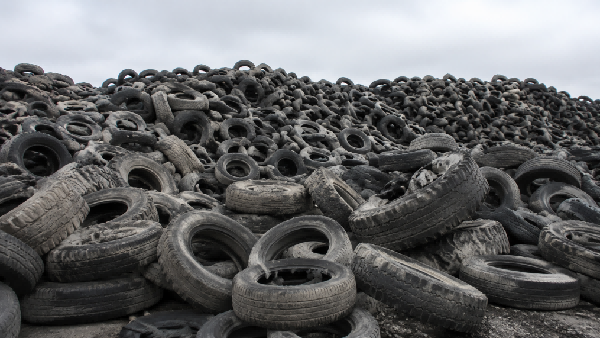
Traditional tire recycling methods mainly include retreading, processing into rubber powder, and manufacturing reclaimed rubber. These approaches each have value in specific scenarios, but they have limitations when it comes to the circular utilization of waste resources, making it difficult to fully extract the resource value contained in waste tires. Tire pyrolysis technology heats waste tires in an oxygen-free or oxygen-deficient environment, breaking the long-chain rubber molecules and converting them into pyrolysis oil, carbon black, steel wire, and other recyclable products, achieving a deep transformation from waste to resource.
Pyrolysis aligns with the direction of the circular economy because of the multiple benefits it brings. On one hand, the entire tire pyrolysis process is completed under enclosed and controllable conditions; compared with simple incineration and crude disposal, emissions can be better controlled. On the other hand, pyrolysis can convert waste tires into energy and raw materials that can replace fossil resources, reducing dependence on virgin resources. Recovered carbon black produced through further processing of pyrolysis oil can be used in the production of tires and rubber goods, becoming a recycled raw material in green supply chains.
From a global perspective, waste tire pyrolysis projects are accelerating, and the markets for related equipment and product applications are also showing growth momentum. Market demand for efficient, stable, and environmentally friendly pyrolysis technology and equipment is gradually increasing. Completing the resource recovery of waste tires through continuous, more stable, and cleaner methods has become a shared need for industrial upgrading.
As a high-end equipment manufacturer with a long-term focus on pyrolysis technology, Niutech has been dedicated to the field for more than 30 years, building systematic capabilities spanning technology R&D, high-end manufacturing, equipment sales, and project operation. Drawing on its core continuous pyrolysis technology, Niutech is committed to helping customers worldwide efficiently convert waste tires and waste plastics into high-quality pyrolysis products, promoting the development of the circular economy, building a green and low-carbon resource recycling system, and providing verifiable, replicable technology, equipment, and solutions.