
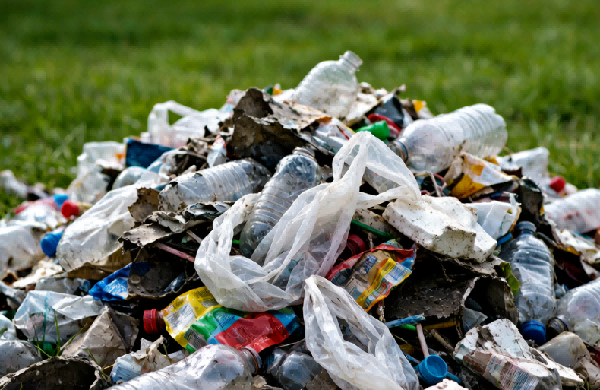
Approximately 350 million tons of plastic waste are generated each year globally, yet less than 10% is recycled. The fundamental reason lies in the inherent “ceiling” of traditional mechanical recycling—it can only process single-category, high-purity plastics, and each recycling cycle leads to material performance degradation, ultimately ending in landfill or incineration. The emergence of chemical recycling, however, enables plastics to truly “return from the dead”—forming a closed loop from waste plastics back to molecules, monomers, and even new plastics, theoretically enabling infinite recycling.
Enterprises represented by Niutech are emerging as prominent players in the field of chemical recycling of waste plastics, transforming the way global plastic polymers are recycled.
I. Chemical Recycling: Not Just “Recycling,” but “Re-creation”
During mechanical recycling, material performance gradually degrades, ultimately only allowing downcycling. Chemical recycling, by contrast, decomposes waste plastics to the molecular level through chemical reactions, restoring them to their original monomers or basic chemicals prior to polymerization, which can then be repolymerized into brand-new plastics with quality identical to virgin materials.
Chemical recycling is not a single technology but a diversified technological system, including cracking methods (which can be divided into thermal pyrolysis and catalytic cracking) and depolymerization methods (such as hydrolysis, alcoholysis, aminolysis, etc.). Among these, thermal pyrolysis offers greater feedstock tolerance and is particularly effective for plastics such as PE, PP, and PS, making it the most mainstream chemical recycling method for waste plastics today.
II. How Does Chemical Recycling Achieve “Infinite Recycling” of Plastics?
Traditional mechanical recycling requires pure, single-type feedstocks, whereas chemical recycling can process virtually any type of waste plastic—including flexible packaging, film bags, composite packaging, medical waste, and even ocean plastics—without the need for fine sorting or washing. This means that low-value waste plastics, which account for approximately 46% of plastic production and were previously destined for landfill or incineration, now finally have a resource recovery pathway.
Through thermal pyrolysis or depolymerization reactions, the high-molecular polymers in waste plastics are “unzipped” to the small-molecule or monomer level. During this process, the waste plastics undergo molecular-level “purification.”
The monomers or basic chemicals obtained from this decomposition are then repolymerized to synthesize new plastics. Because the entire process is reconstructed at the molecular level, the quality of the recycled products is identical to that of virgin materials and can be used in demanding high-end applications such as food packaging, medical devices, and automotive components.
The pyrolysis oil or monomers derived from waste plastic pyrolysis can enter the production systems of petrochemical enterprises, be processed alongside virgin fossil-based feedstocks, and have their recycled content traced through a mass balance accounting system. Ultimately, brand owners, packaging companies, chemical enterprises, and recycling firms form a complete industrial chain closed loop.
Theoretically, this process can be repeated indefinitely—this is the essence of the “infinite recycling” capability that chemical recycling confers upon plastics.
III. Niutech: A Benchmark for Chemical Recycling from “Theory” to “Practice”
As a STAR Market-listed company in China, Niutech has specialized in thermal pyrolysis technology for over 30 years and has been honored with the National Science and Technology Progress Award. Its self-developed “Waste Plastic Pyrolysis System” was the first in the industry to solve persistent problems such as system coking, difficulties in dynamic sealing during feeding and discharge, and product polymerization, achieving industrial continuous operation of pyrolysis equipment under safe and environmentally compliant conditions.
This technological pathway exhibits strong feedstock adaptability, capable of processing various single or mixed waste plastics—including PP, PE, PS, ABS, nylon, and others—without requiring sorting, washing, or dewatering pre-treatment. It directly produces pyrolysis oil, solid fuel, and non-condensable combustible gas, which can be further processed into chemical feedstocks for producing new plastics.
Niutech’s technology has been successfully deployed in dozens of countries and regions worldwide. For example, a 10,000-ton-scale chemical recycling project invested in by the global chemical giant BASF uses Niutech’s technology and equipment to convert mixed waste plastics into high-quality pyrolysis oil, which is then used through deep processing to produce new plastics, marking Niutech’s technology as reaching world-leading standards.
A waste plastic pyrolysis and oil deep-processing project has been operating continuously and stably for over 10 years, serving as a widely recognized benchmark for long-term reliability in the industry.
The Vietnam project has become a benchmark for large-scale continuous waste plastic pyrolysis in Southeast Asia.
Today, major economies—including Europe, the United States, Japan, and China—are promoting chemical recycling through legislation. The EU’s Packaging and Packaging Waste Regulation sets mandatory targets such as 30% recycled content in single-use plastic beverage bottles by 2030. Japan began implementing its revised Law on Promoting Effective Utilization of Resources in April 2026, requiring enterprises that handle large volumes of plastics to set recycled material usage targets. China’s Ecological Environment Code, passed in March 2026, will formally establish a mandatory recycled material usage system.
The emergence of chemical recycling means that the “infinite recycling” of plastics is no longer just a vision. Niutech, with its technical foundation honored by the National Science and Technology Progress Award and its global commercial practices, provides a verifiable, replicable, and scalable recycling solution for this process.