
Within the grand narrative of the global circular economy and the “dual-carbon” goals, a Chinese enterprise is quietly reshaping the global landscape of the scrap tire treatment industry. Niutech, a company that has dedicated nearly four decades to the R&D of pyrolysis technology and equipment manufacturing, has evolved from a technology follower to a global leader through its self-developed industrial continuous intelligent pyrolysis equipment, becoming a highly regarded “Chinese business card” in the international market.
I. Technological Foundation: Overcoming the Global Challenge of Continuous Pyrolysis
In the field of scrap tire pyrolysis, “stable continuous operation” is a widely recognized technological high ground in the industry and the primary measure of a pyrolysis equipment manufacturer’s core capability. Hindered by technical bottlenecks such as “equipment coking, difficulties in sealing during feeding and discharge, and product polymerization,” the actual production capacity of most global pyrolysis projects generally falls below design specifications, and truly large-scale industrial continuous tire pyrolysis cases are extremely rare.
Niutech’s self-developed “Key Technology and Equipment for Pyrolysis Resource Recovery of Organic Solid Waste” integrates eight core technologies, including coking-free operation, gas-tight sealing, and anti-polymerization, successfully solving long-standing industry pain points. Through Niutech’s pyrolysis system, the scrap tire pyrolysis rate can exceed 99%, achieving the goals of harmless treatment, volume reduction, and resource recovery of organic waste. Certified by national authorities as a domestic innovation reaching internationally advanced standards, this technology represents a significant breakthrough.
Niutech’s intelligent pyrolysis equipment employs a PLC/DCS automated intelligent control system that provides real-time monitoring, data collection, display, calculation, processing, and command issuance for each individual piece of equipment and process control point, with automatic deviation correction and automatic alarm functions.
II. International Certification: Breaking Through Technical Barriers in Global Markets
In global competition, technical standards serve as a “passport” for entering high-end markets. Niutech’s tire pyrolysis equipment has obtained seven major international certifications, including EU CE, German TÜV, ATEX explosion-proof, and ISCC International Sustainability and Carbon Certification, making Niutech the first domestic manufacturer of high-end intelligent continuous pyrolysis equipment capable of simultaneously meeting this comprehensive set of standards.
Behind this series of certifications lies Niutech’s rigorous alignment with international standards and sustained commitment. For example, the EU CE certification process involves comprehensive evaluations of products in terms of safety, health, and environmental protection, while the German TÜV certification is renowned for its stringency and represents the highest safety standards in the international equipment manufacturing industry. The ISCC certification is an internationally recognized sustainability and carbon certification system; obtaining this certification means that Niutech’s pyrolysis products—pyrolysis oil and recovered carbon black (rCB)—are approved for entry into the EU’s high-end chemical market.
This means that projects utilizing Niutech’s technology can not only meet increasingly stringent environmental regulations but also gain additional revenue through carbon trading mechanisms, further enhancing economic benefits.
III. Global Deployment: Industrial Benchmarks from Europe to South America
Niutech’s globalization strategy has achieved notable success, with its equipment successfully exported to dozens of countries and regions, including Germany, the United Kingdom, Denmark, Brazil, Hungary, Turkey, Estonia, India, Thailand, Malaysia, Iraq, and South Korea.
The successful delivery of the Germany project demonstrates that its equipment meets the stringent environmental and technical performance requirements of both the EU and Germany. The Hungary project has been recognized as an EU demonstration project, using pyrolysis to process collected scrap tires to produce carbon black and pyrolysis oil, with the pyrolysis oil achieving Tire-Derived Fuel (TDF) utilization. All testing indicators comply with relevant EU requirements and regulations, establishing it as an EU-standard demonstration project.
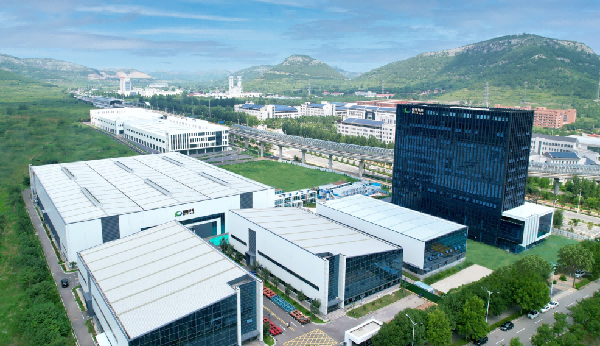
Beyond equipment sales, Niutech is actively exploring a dual-drive business model of “equipment + operation.” Through the holding and operation of the Zouping, Shandong, Scrap Tire Pyrolysis Resource Comprehensive Utilization Project, the company has upgraded from an equipment supplier to a comprehensive service provider. In March 2026, it launched an investment and expansion project of 100,000 tons/year of tire pyrolysis comprehensive utilization; upon completion of the expansion, the total tire pyrolysis processing capacity will jump from the current 60,000 tons/year to 160,000 tons/year. This expansion adopts Niutech’s new-generation large-capacity industrial continuous intelligent pyrolysis equipment, which features core advantages such as significantly increased single-unit processing capacity and efficiency, greatly reduced overall operating costs, and substantially shortened payback periods.
On the product side, the recovered oil has obtained international certification, enabling direct access to international high-end markets; through technological innovation, the recovered carbon black is continuously being upgraded toward standardization and higher value, further addressing premium customers’ requirements for product consistency, stability, and application performance.
As the global carbon economy accelerates, the scrap tire pyrolysis industry is facing unprecedented development opportunities. With nearly four decades of technological accumulation, Niutech has transitioned from a “follower” to a “company being chased” in the market, and stands as a shining example of Chinese intelligent manufacturing in the global circular economy sector.