
Scrap tires are currently one of the most abundant solid wastes produced globally, with over one billion generated each year. Faced with this stubborn waste that is difficult to degrade naturally, the application and promotion of pyrolysis technology have completely transformed the way scrap tires are recycled.
A mature continuous pyrolysis system can convert nearly 100% of scrap tires into multiple high-value-added products, each with clear market applications and considerable economic benefits.
I. Value Reshaping of Tire Pyrolysis Products
Tire pyrolysis recovered oil is an important product of pyrolysis recovery. Its calorific value is higher than that of coal, allowing it to be used directly as industrial boiler fuel. More importantly, tire pyrolysis oil is a high-quality chemical feedstock for carbon black production as a substitute for coal tar, reducing dependence on traditional coal tar, lowering production costs, and promoting the transformation of the carbon black industry toward green raw materials. Furthermore, after desulfurization, pyrolysis oil can be used as a base oil for diesel or gasoline, and when refined into chemical feedstocks, its value increases significantly.
Pyrolysis carbon black (rCB) is a key product from scrap tire pyrolysis, primarily composed of 80%–90% carbon black and 10%–20% inorganic compounds. After magnetic separation of metals, rCB can be processed through grinding, activation, and other treatments to produce recovered carbon black, which is widely used in rubber products, coatings, and plastics. Due to its excellent electrical conductivity and material reinforcement properties, rCB effectively improves the mechanical performance and wear resistance of final products. In practical applications, rCB can be blended with virgin carbon black in certain proportions for rubber products or used as a filler in asphalt modification, plastic products, and other fields. As environmental regulations tighten and enterprises seek cost reductions, market demand for rCB is continuously rising.
Steel wire separated during pyrolysis can be directly recycled to steel mills for smelting, achieving metal resource circularity. The combustible gas generated during pyrolysis can be directly used as fuel for the pyrolysis reactor, enabling energy self-sufficiency in the process and reducing external energy consumption. This “self-sustaining cycle” design means that, under normal operating conditions, the entire production line requires almost no external fuel, greatly reducing operational costs.
II. Niutech’s Shandong Project: An Industrial Benchmark for Technology Implementation
In the field of scrap tire pyrolysis, Niutech is an undisputed industry leader. With nearly 40 years of deep focus on the pyrolysis field, its self-developed “Key Technology and Equipment for Pyrolysis Resource Recovery of Organic Solid Waste” has been honored with the National Science and Technology Progress Award, establishing it as a standard-setter in China’s pyrolysis sector and a global technology leader.
Niutech’s self-operated project—the Shandong, Scrap Tire Pyrolysis Resource Comprehensive Utilization Project—has, under the dual-drive strategy of “equipment + operation,” expanded its tire recycling business into a full-industry-chain comprehensive service. The project currently has a scrap tire processing capacity of 60,000 tons per year. Leveraging Niutech’s advanced pyrolysis technology and high-end equipment, it produces high-quality pyrolysis oil and carbon black products with high added value, commanding a green market premium and strong market recognition.
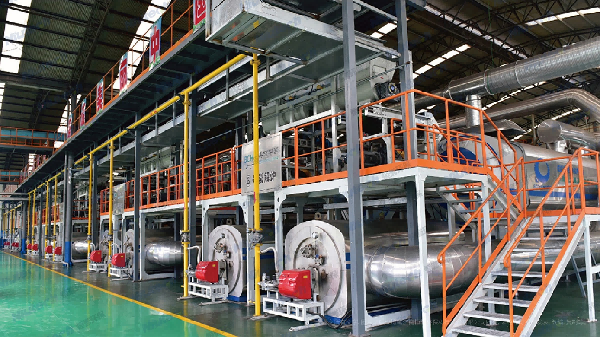
In March 2026, Niutech announced it would invest approximately RMB 220 million to expand the project by an additional 100,000 tons/year of tire pyrolysis resource comprehensive utilization. Upon completion of this expansion, total tire pyrolysis processing capacity will jump from the current 60,000 tons/year to 160,000 tons/year.
Behind this expansion decision is sustained strong market demand: the global share of scrap tire pyrolysis processing rose from less than 12% in 2020 to about 21% in 2025, and is expected to exceed 35% by 2030. The global pyrolysis oil market reached $8.6 billion in 2024 and is projected to surpass $11 billion in 2026.
Particularly noteworthy is that the Shandong project expansion will adopt Niutech’s new-generation large-capacity industrial continuous intelligent pyrolysis equipment, which features core advantages such as significantly increased single-unit processing capacity and efficiency, greatly reduced overall operating costs, and substantially shortened payback periods. The production line employs a PLC/DCS automated intelligent control system that provides real-time monitoring, collection, display, calculation, processing, and command issuance for each individual piece of equipment and process control point during the tire pyrolysis process, with automatic deviation correction and automatic alarm, truly achieving intelligent safe production.
In terms of environmental performance, Niutech’s technology and integrated equipment have obtained seven major international certifications, including EU CE, German TÜV, ATEX explosion-proof, and ISCC International Sustainability and Carbon Certification.
III. A Win-Win for Environmental and Economic Benefits
The value of scrap tire pyrolysis is reflected not only in economic terms but also in outstanding environmental benefits. It is estimated that processing 10,000 tons of scrap tires via pyrolysis can reduce carbon dioxide emissions by approximately 11,000 tons, contributing tangible “green power” to carbon neutrality goals.
As the global carbon economy accelerates, pyrolysis technology is becoming the most popular technological pathway in the field of comprehensive scrap tire utilization. The transformation of scrap tires from waste into resources and energy is not only a triumph of technology but also an important contribution to building a green, low-carbon, circular economic system.