
Maximizing the value of plastic pyrolysis products is key to closing the economic loop from “pollution control” to “resource regeneration” for waste plastics. This is not simply about converting waste plastics into primary products, but rather about deeply processing the oil, gas, and other products derived from pyrolysis and precisely directing them into high-value application areas through technological innovation, process optimization, and industrial chain synergy, ultimately achieving a unity of environmental and economic benefits. Taking the practices of Niutech, a global industry benchmark, as an example, the company has successfully embedded pyrolysis oil into the production chains of international chemical giants by overcoming the bottleneck of continuous pyrolysis technology, providing a global model for value maximization.
I. Diversified Composition and High-Value Potential of Plastic Pyrolysis Products
Plastic pyrolysis is a complex chemical recycling process. Its products mainly include pyrolysis oil, pyrolysis gas (non-condensable combustible gas), and solid residues.
Pyrolysis oil is the most valuable primary product. It has a complex composition, including mixtures of alkanes, alkenes, and aromatics. There are two pathways to maximize its value:
1. Through processes such as hydrotreating, it can be upgraded into high-quality clean fuel. For example, after hydrogenation treatment, it can meet the standard requirements for gasoline and diesel.
2. Using technologies such as catalytic cracking, pyrolysis oil can be directly converted into basic chemical monomers like ethylene and propylene. These monomers can be repolymerized to produce new plastic products of quality identical to petroleum-based virgin plastics, truly achieving a closed loop “from waste plastics to new plastics” and completely escaping the downcycling dilemma. The added value of products from this pathway is much higher than that of fuels.
Non-condensable combustible gas: The pyrolysis process generates a large amount of high-calorific-value gas, mainly composed of methane, hydrogen, etc. The optimal use of this gas is internal recycling within the system to provide heat for the pyrolysis reaction itself, significantly reducing or even eliminating external energy consumption—a key factor in achieving project economic viability. Surplus gas can also be used for internal combustion engine power generation, with energy conversion efficiency exceeding 30%, or as a feedstock for producing green hydrogen or green methanol, extending the green chemical industry chain.
Solid residues: Traditionally considered low-value by-products, they can be used as building materials or solid fuel, achieving full-component resource recovery.
II. Benchmark Practice: How Niutech’s Projects Achieve a Value Maximization Closed Loop
Niutech not only provides technology but also vividly demonstrates a complete business model for maximizing the value of pyrolysis products through its international benchmark projects. Its core strategy is deep integration of technology, equipment, and industrial synergy, directly channeling pyrolysis products into high-end application markets.
1. Denmark BASF Project: A Feedstock Pathway Endorsed by an International Chemical Giant
The technology and equipment Niutech provided for an early Danish waste plastic pyrolysis plant received investment and recognition from BASF, a global chemical giant. The project proved that the quality of pyrolysis oil produced by Niutech meets the stringent feedstock requirements of the world’s top chemical companies. The pyrolysis oil is used by BASF as a chemical feedstock, entering the global high-end chemical supply chain, with its value far exceeding that of ordinary fuel oil. This provides authoritative international validation for the high-value “feedstock” pathway of pyrolysis oil.
2. Vietnam High-End Chemical Recycling Plant Project: Achieving a Complete “Waste Plastic-to-New Plastic” Closed Loop
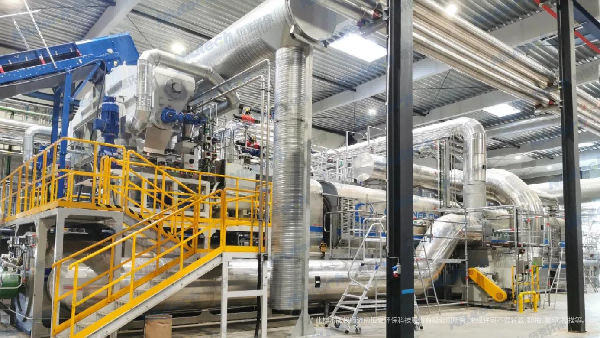
This is an even more representative case of value maximization. An internationally renowned group selected Niutech’s intelligent pyrolysis equipment to build a plant in Vietnam. The project converts industrial waste plastics into high-quality pyrolysis oil via a continuous pyrolysis system, which is then directly used in the client’s own chemical plant for subsequent processing, forming an internal closed-loop industrial chain of “waste plastics → pyrolysis oil → new plastics.” This allows the value of the pyrolysis products to be captured and amplified to the greatest extent within the same group, representing one of the most ideal business models for chemical recycling. The project has been successfully commissioned and operates efficiently, earning high praise from the client.
3. Global Deployment and Certification: Opening Market Channels for Value Realization
Niutech’s pyrolysis equipment has obtained seven major international certifications, including EU CE, German TÜV, ATEX explosion-proof, and ISCC International Sustainability and Carbon Certification. These certifications are not only marks of technological advancement but also “passports” for products to enter global markets, especially those with high green barriers like the EU. They remove market obstacles for the value realization of pyrolysis products.
Maximizing the value of plastic pyrolysis products is a systematic engineering endeavor that ranges from stable production to deep processing and then to industrial integration. Niutech’s practices clearly outline this path: taking the breakthrough of continuous operation as the technical cornerstone to ensure the stability and quality of primary products; obtaining international authoritative certifications as the market cornerstone to open channels for high-end applications; and ultimately, through deep collaboration with the downstream chemical industry, locking the value of pyrolysis oil into the highest-end chemical feedstock chain. In this way, it truly achieves the strategic goal of turning “white pollution” into “urban oil fields,” contributing a verifiable, replicable, and scalable Chinese solution to the global circular economy.