
As global plastic production continues to rise and the pressure to control pollution becomes increasingly severe, plastic recycling has become a critical link in achieving sustainable development. Traditional recycling pathways are facing a series of profound structural challenges. In contrast, chemical recycling, represented by technologies such as pyrolysis, demonstrates comprehensive advantages through its unique ability to process low-value waste plastics and achieve material closed-loop recycling, offering new hope for solving the plastic pollution predicament. The successful practices of China’s leading enterprise Niutech, particularly the implementation of its global industrial projects, provide strong evidence for the feasibility and immense potential of this technological pathway.
I. Severe Challenges Facing Traditional Plastic Recycling
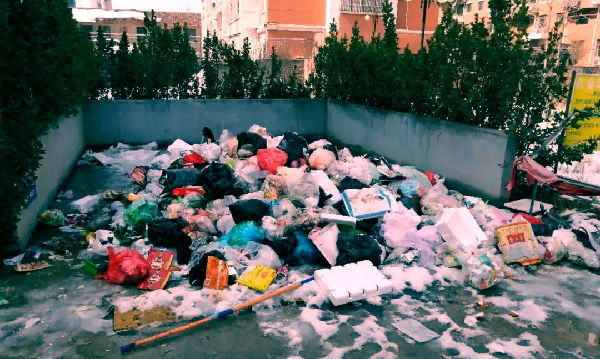
1. The global average recycling rate for plastics is only about 15%, meaning the vast majority of discarded plastics do not enter the circular system. Over 60% of waste plastics are landfilled or abandoned, while approximately 24% are directly incinerated. The plastic recycling process is complex. Mechanical recycling, the most widely applied method, has a narrow applicability, mainly suitable for single-component, high-purity waste plastics such as PET beverage bottles. However, low-value waste plastics such as flexible packaging and food films, which account for approximately 46% of plastic production, are often difficult to recycle effectively through mechanical means due to contamination, complex material composition, and low recovery value; they ultimately end up mostly in incinerators or landfills.
2. Low-value plastics are lightweight, have diverse material types, and incur high collection costs, while the sorting system remains immature. Insufficient public awareness of waste sorting and inconvenient recycling channels further increase the difficulty and cost of recycling. For businesses, the cost of processing low-value plastics may even exceed the value of the raw materials extracted, leading to a lack of commercial incentive.
3. Economic viability of recycling: traditional recycling methods yield low economic benefits, cannot sustainably generate substantial returns, and face development bottlenecks.
II. Chemical Recycling: Comprehensive Advantages for Breaking the Deadlock
In response to the “blind spots” of mechanical recycling, chemical recycling uses plastic pyrolysis technology to break down waste plastics into molecular-level raw materials, demonstrating revolutionary advantages.
The greatest advantage of chemical recycling lies in its strong feedstock inclusivity. It can process low-value, contaminated, and mixed plastic waste, including flexible packaging and composite films that are difficult to handle via mechanical recycling. This directly addresses the most intractable problem in current plastic pollution control, providing a resource recovery outlet for low-value waste plastics, which account for nearly half of total plastic waste.
Chemical recycling can achieve the same-grade recycling or even “upcycling.” Through continuous pyrolysis technology, waste plastics are converted into pyrolysis oil or monomers, which can be reprocessed to produce new plastics with physical and chemical properties identical to virgin plastics. This means plastics can be repeatedly returned to a high-quality initial state, theoretically achieving “infinite recycling” and completely breaking the destiny of single-use plastics.
Chemical recycling achieves the transformation from plastic to fuel, or even to feedstocks for producing new plastics, directly reducing dependence on fossil resources such as crude oil. Compared with direct incineration or landfilling, the chemical recycling process can significantly reduce carbon emissions across the full lifecycle.
III. Niutech’s Industrial Practices
The advantages of chemical recycling are not merely theoretical; Chinese enterprises represented by Niutech have already verified the technical feasibility and commercial value through successful global industrial projects. The long-term industrialization of chemical recycling has faced world-class challenges, such as system coking and unstable continuous operation. After more than 30 years of R&D, Niutech has overcome these technical bottlenecks. Its “Integrated Low-Temperature Pyrolysis Technology and Equipment for Resource Utilization of Waste Plastics” has been honored with the National Science and Technology Progress Award, with technical indicators reaching internationally leading levels.
Niutech’s technical strength has been rigorously tested by international chemical giants and renowned groups. Its early participation in the Danish BASF plastic chemical recycling project received investment and recognition from BASF. An even more representative example is its Vietnam project. Invested by an internationally renowned group and utilizing Niutech’s “New Generation • Large-Scale Industrial Continuous Intelligent Waste Plastic Pyrolysis Technology and Integrated Equipment,” a high-end chemical recycling plant was built in Vietnam. The project has been successfully commissioned and has operated efficiently and continuously for several months, converting industrial waste plastics into pyrolysis oil that is directly used in the client’s own chemical plant to produce new plastics, achieving a complete commercial closed loop. This successful case has created multiple international firsts and become a verifiable, replicable, and scalable industry benchmark.
Looking ahead, as global consensus on plastic pollution control is reached, national policies continue to intensify, and companies like Niutech persistently drive technological progress and project implementation, chemical recycling stands on the brink of large-scale growth. It is not only an effective complement to mechanical recycling but also one of the ultimate pathways for completely solving low-value plastic pollution and achieving a full-lifecycle circular economy for plastics.