
The EU’s Circular Economy Act is set to comprehensively reshape the tire industry—from product design and production responsibility to waste management—driving its transformation toward a closed-loop ecosystem of “resources → products → renewable resources,” a change that amounts to a “green revolution” for the tire sector. In this transformation, waste tire pyrolysis technology, as a key pathway to achieving the closed-loop recycling “from tires to tires,” is playing an increasingly critical role.
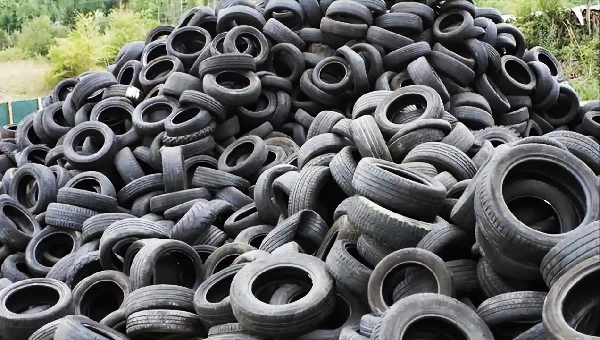
The extended producer responsibility (EPR) system requires the establishment of a quality certification and traceability system for recycled materials covering the entire EU, ensuring that product quality is verifiable and sources traceable. For example, it requires recording the full-chain information of tire production, use, and recycling, processing, and application of recycled materials after end-of-life. This means tire manufacturers must take responsibility for the entire life cycle of their products, with ultimate responsibility extending to the collection and treatment of scrap tires. Companies must transform from mere manufacturers into life-cycle managers of their products, enhancing competitiveness through technological innovation and green management. For instance, they need to establish tire recycling networks or cooperate with recycled material suppliers. Enterprises with sustainable development capabilities will gain a “green passport” to accelerate their internationalization process. Companies can fulfill their obligations by building their own recycling systems or using scrap tire recycling equipment, but both approaches will increase production costs.
Under the framework of the EPR system, tire companies are actively seeking efficient and environmentally friendly scrap tire treatment technologies. Pyrolysis technology can convert scrap tires into high-value products such as pyrolysis oil, recovered carbon black (rCB), steel wire, and combustible gas, achieving 100% resource recovery, which perfectly meets the closed-loop requirements for companies to fulfill their recycling responsibilities. Among these, pyrolysis equipment manufacturers like Niutech are using this waste-to-energy system to transform old tires into clean carbon black for manufacturing new tires, achieving a “tire-to-tire” cycle and creating a sustainable tire management pathway.
Investing in pyrolysis projects not only fulfills environmental responsibilities but also turns waste management costs into profit sources. For the “New Generation Large-Scale Industrial Continuous Intelligent Scrap Tire Pyrolysis Production Line” that Niutech supplies to European clients, entrusting such projects to process scrap tires allows companies to achieve considerable economic returns by recovering high-value-added pyrolysis oil and carbon black.
The recovered carbon black (rCB) generated from pyrolysis serves as a sustainable substitute for virgin carbon black in new tire manufacturing. According to the EU classification system, pyrolytic carbon black is categorized as a “highly sustainable industry,” with each ton produced reducing CO₂ emissions by 3.1 tons. Niutech’s pyrolysis technology produces high-quality rCB that, after deep processing, can be used in high-end product manufacturing, helping tire companies meet the EU’s requirements for recycled material content.
Niutech’s technology and integrated equipment have obtained EU CE certification, German TÜV certification, and EU ATEX certification, and its projects have also passed ISCC certification, with its products meeting the requirements of the EU Renewable Energy Directive (RED II). These international certifications ensure that the quality of the recycled oil and carbon black it produces allows them to circulate freely in the EU market as “secondary raw materials,” providing a reliable source of compliant recycled materials for downstream tire companies. Because Niutech’s pyrolysis system produces zero emissions during use, it fully complies with the stringent emission standards of the EU “Green Deal,” making it easier to obtain policy support and green credit.
Pyrolysis technology itself is continuously being upgraded, shifting from early batch-based, highly polluting processes to large-scale, intelligent, and clean continuous production. Niutech’s “New Generation Large-Scale Industrial Continuous Intelligent Scrap Tire Pyrolysis Production Line” represents the advanced level of the industry. It has overcome the global challenge of “easy coking in the pyrolysis system,” achieving safe, environmentally friendly, secondary-pollution-free, long-term, continuous, and stable operation throughout the entire tire pyrolysis process.
Niutech’s pyrolysis equipment has been industrially implemented in dozens of countries, including Germany, South Korea, and Brazil, and its international demonstration projects provide replicable success stories for domestic enterprises.
Through full-chain supervision, technical standard guidance, and policy incentives, the EU Circular Economy Law is driving the tire industry toward a circular economy. Scrap tire pyrolysis technology, especially the advanced, continuous, and intelligent systems represented by Niutech, offers mature, commercially viable solutions for tire companies to fulfill their producer responsibilities, achieve eco-design goals, and secure compliant recycled raw materials. Enterprises need to actively collaborate with such technology providers, turning challenges into development opportunities and achieving sustainable development through green design, technological innovation, and life-cycle management.